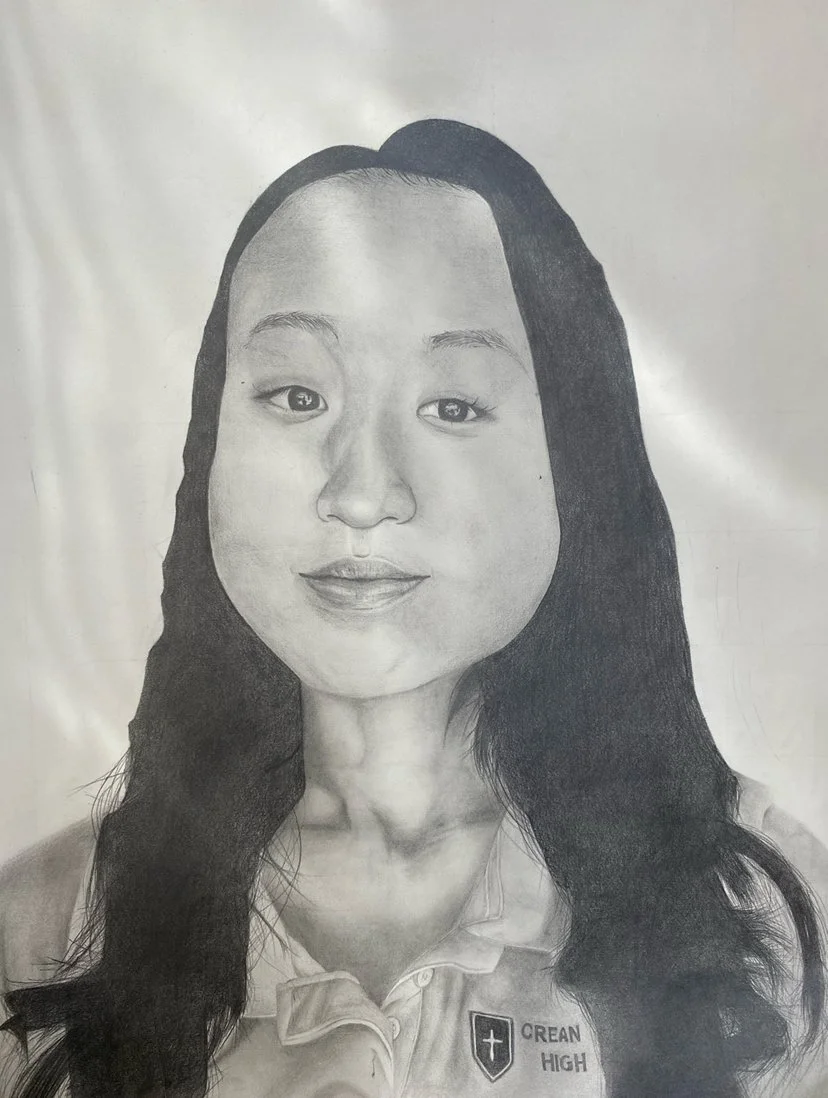
Innocence | 2025 | Graphite and Color Pencil on Paper | 18 × 10in.
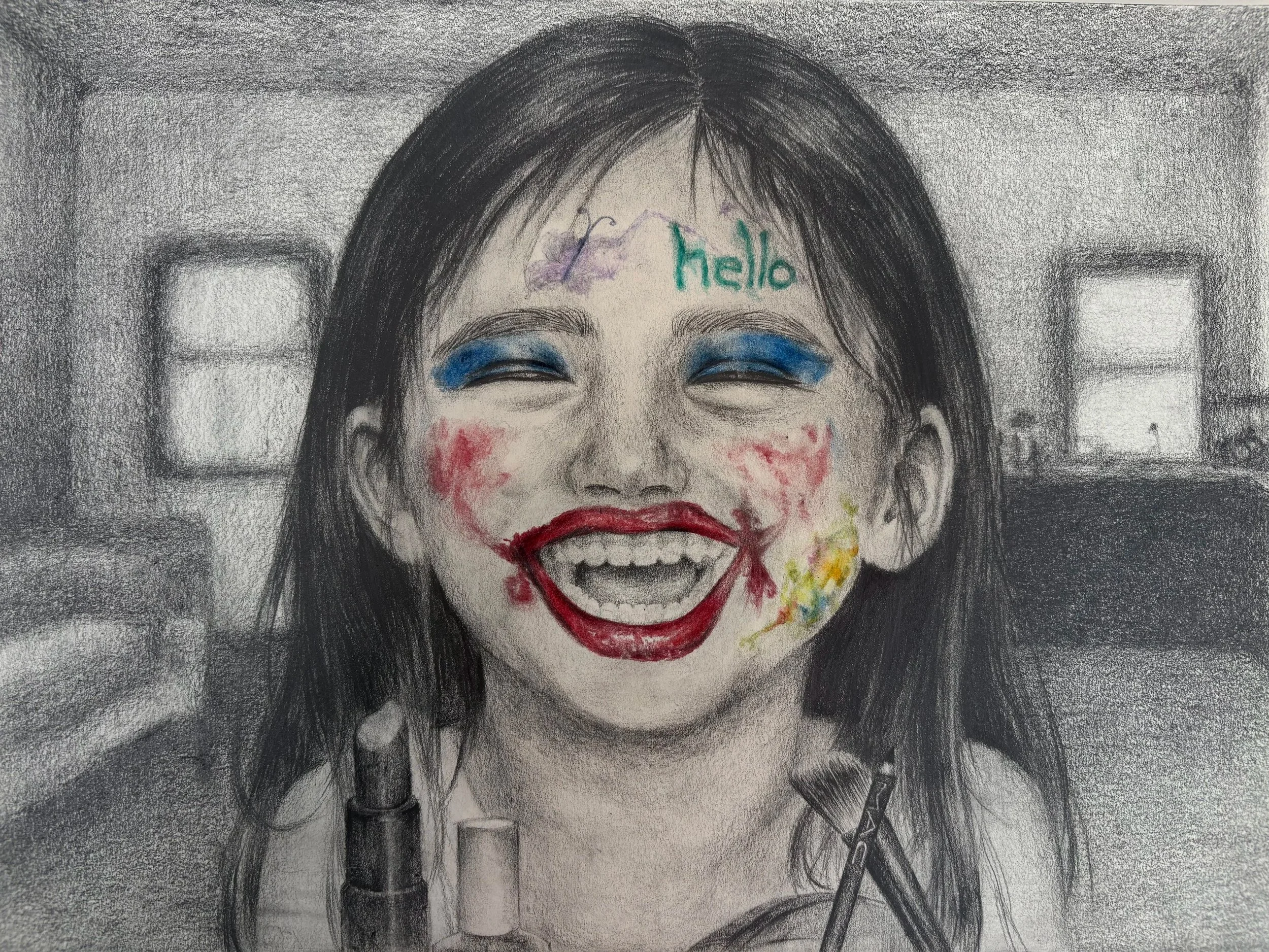
Before appearance becomes connected to judgment, beauty can exist simply as play. The uncontrolled lipstick, bright eyeshadow, and colorful marks across the girl’s face resemble drawing or painting more than conventional makeup. Nothing is symmetrical or carefully corrected, yet her expression remains completely joyful. I use this lack of precision to contrast the way children experiment with appearance with the pressure to perfect it later in life. The work conveys a stage in which makeup has no purpose beyond curiosity and self-expression, before the awareness of beauty standards begins to influence how someone sees myself.
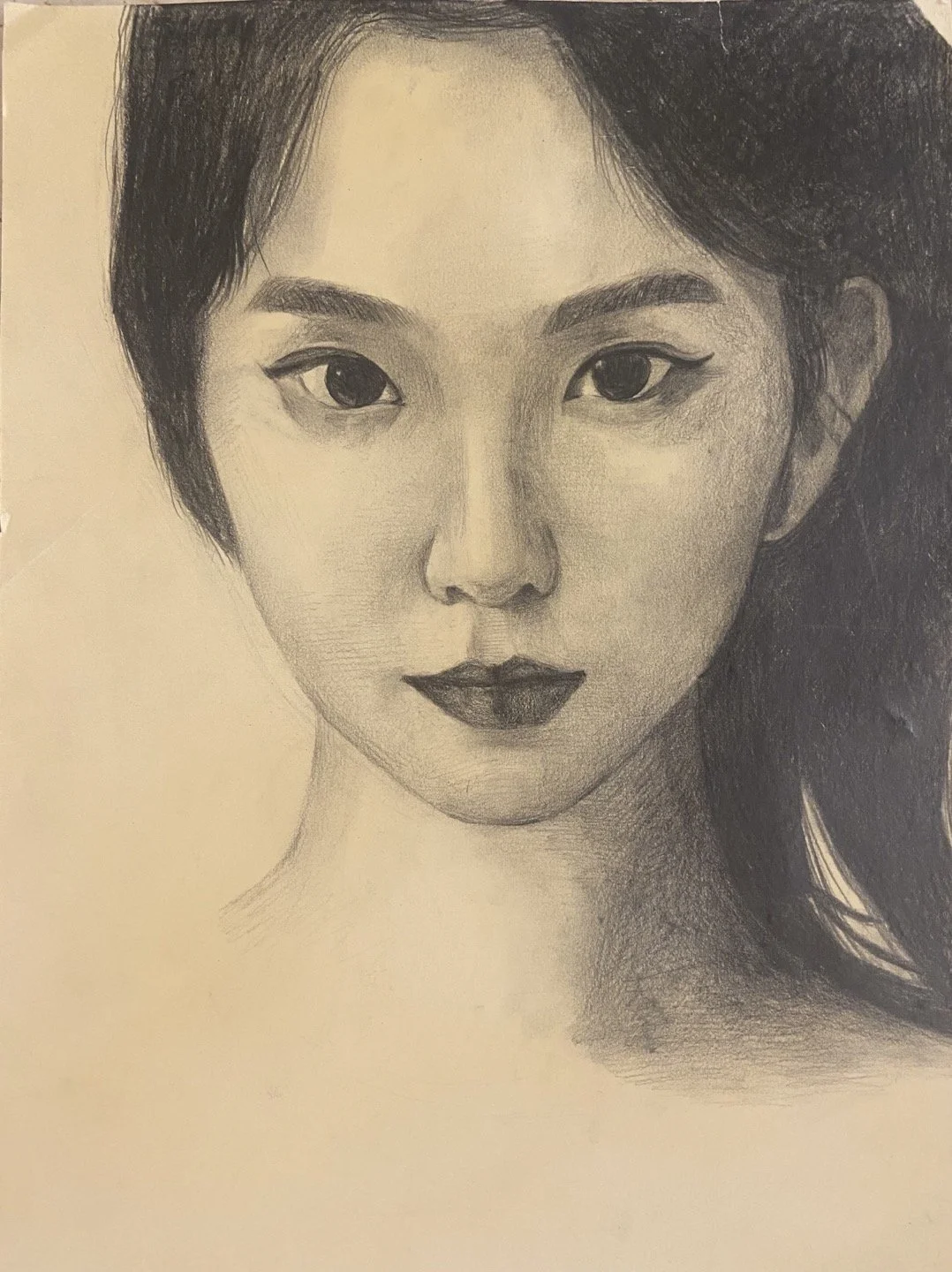
Beauty standards often begin with exposure to an image that appears more polished, balanced, and perfected than ordinary reality. The woman’s smooth features and controlled expression create an almost unreachable ideal, while her direct gaze prevents the viewer from observing her passively. Instead, she appears to look back, creating the uncomfortable feeling of being evaluated by the very standard being admired. I wanted to convey the first moment when beauty changes from something playful into something comparative—the realization that there may be a particular appearance society expects us to pursue.
Stare | 2024| Graphite on Paper | 18 × 24 in.
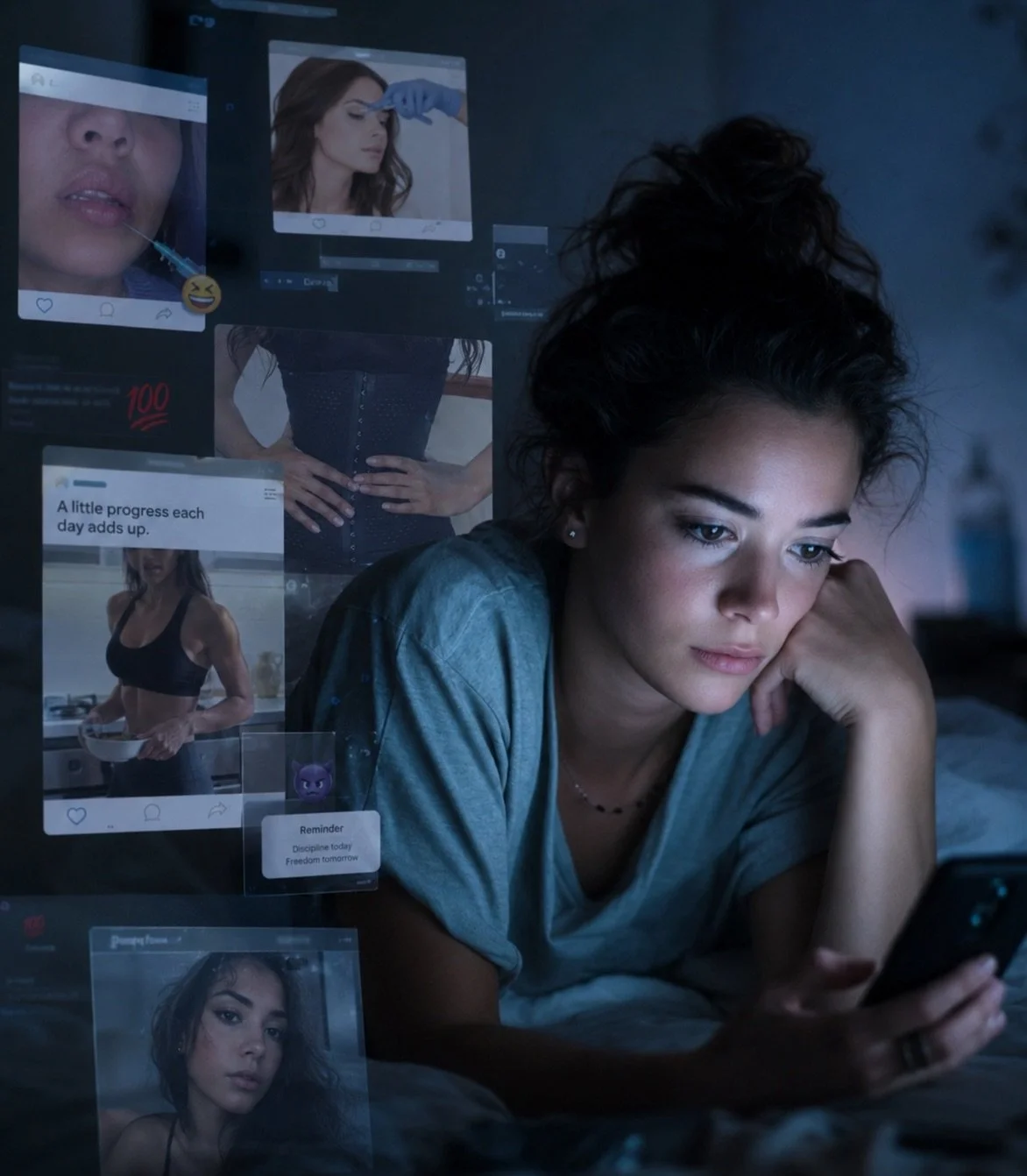
Swamp of Comparison | 2026 | Oil Paint on Canvas | 18 × 24 in.
Young people rarely encounter beauty standards in isolation. Social media, advertisements, fashion, cosmetics, and consumer brands repeatedly present carefully selected versions of attractiveness until those images begin to feel normal. I surround the central figure with idealized women and beauty-related imagery until almost all empty space disappears, visually trapping her within the expectations she consumes every day. The composition conveys how constant exposure can quietly change perception: admiration develops into comparison, and comparison can gradually become insecurity. Rather than portraying one specific source as responsible, I wanted to show how beauty pressure accumulates through an entire visual environment.
Help Yourself | 2026 | Oil Paint on Canvas | 24 × 18 in.
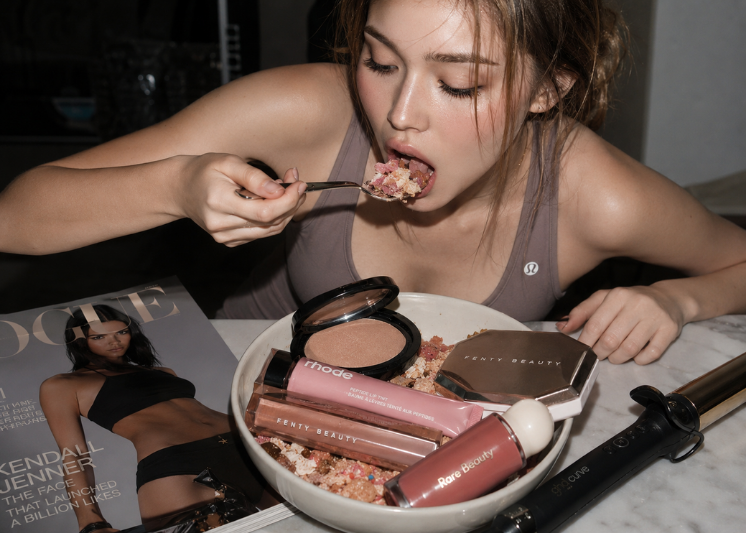
Beauty culture is not only observed; it is continuously consumed through products, trends, advertisements, brands, and idealized images. I make that metaphor literal by placing cosmetics inside a bowl and presenting them as food. The image of an idealized woman beside the subject acts almost like the promised result of that consumption—the appearance she is trying to absorb into herself. The exaggeration is intentionally absurd because it exposes the endless nature of the cycle. I wanted to convey how insecurity can encourage constant consumption while never providing lasting satisfaction: there is always another product, trend, or improvement presented as the next solution.
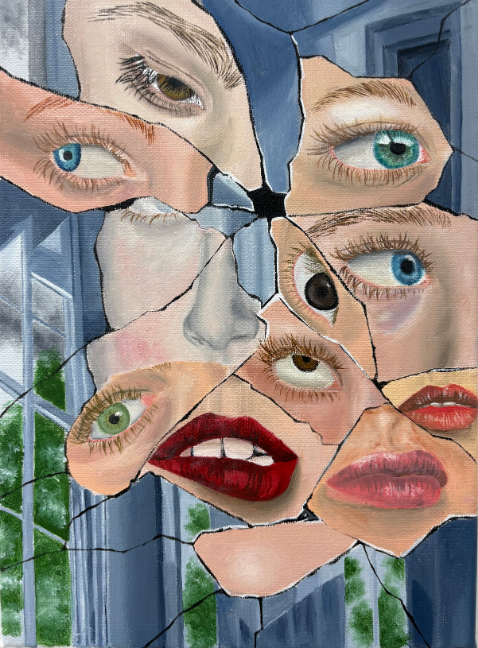
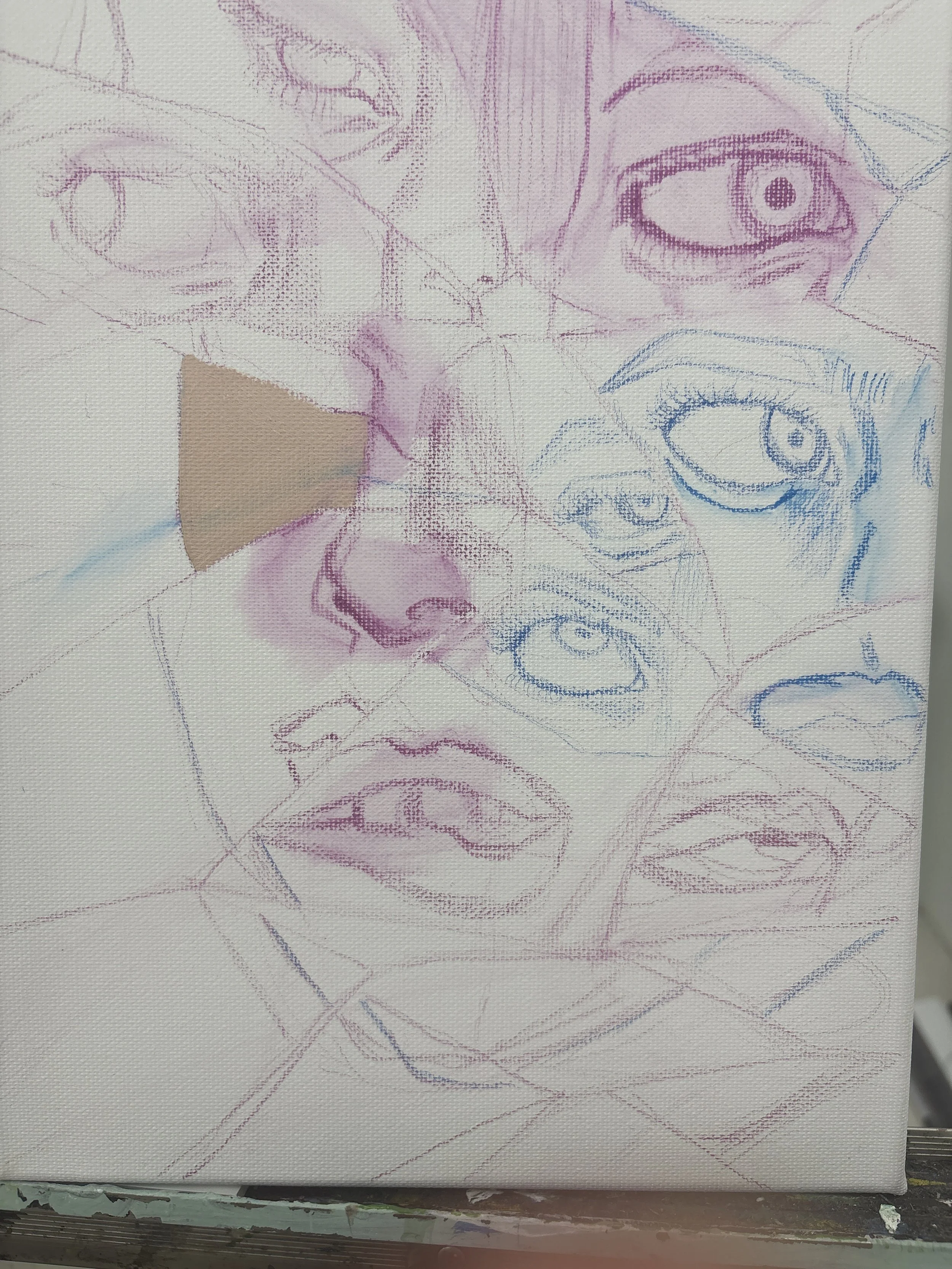
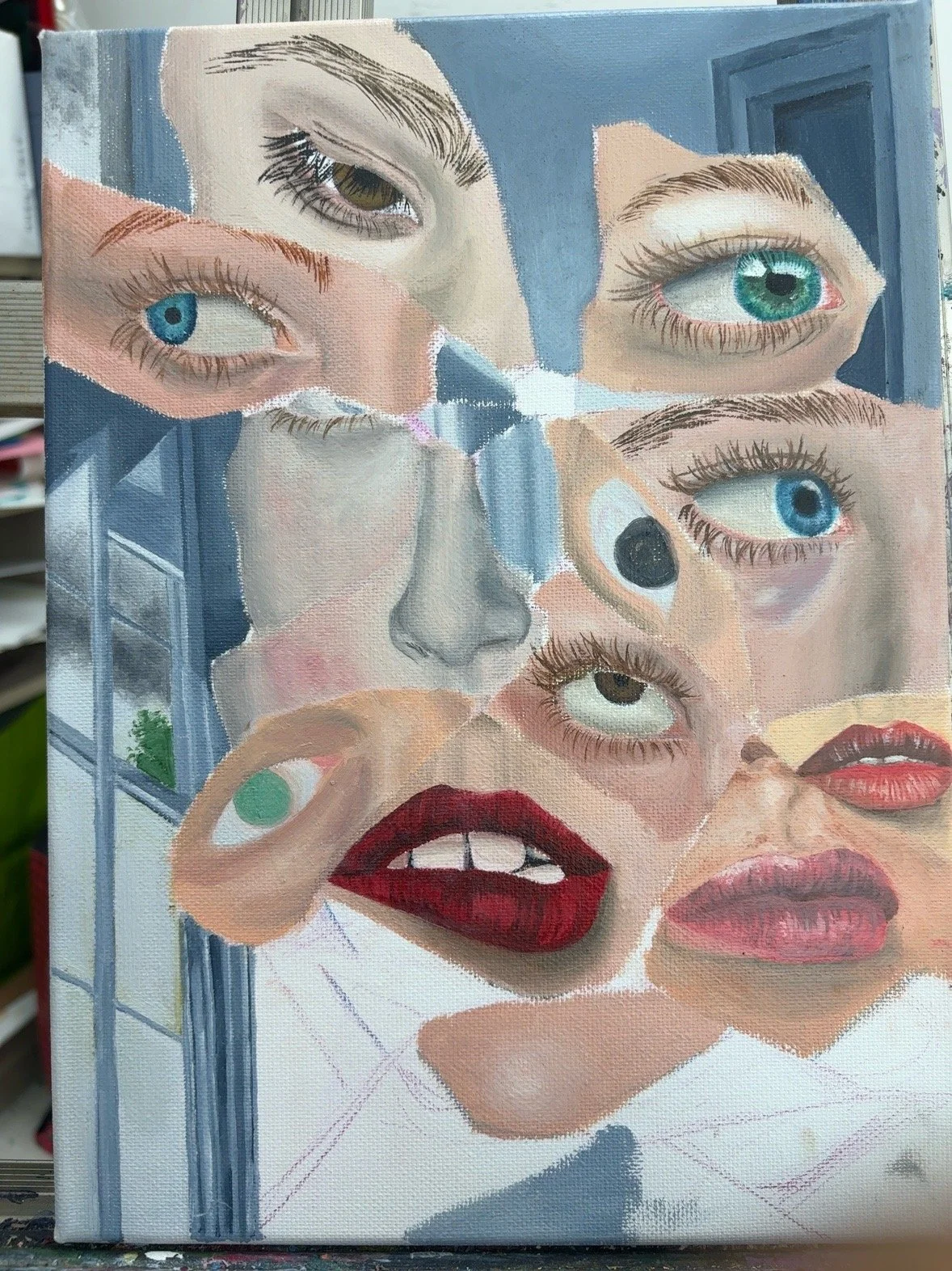
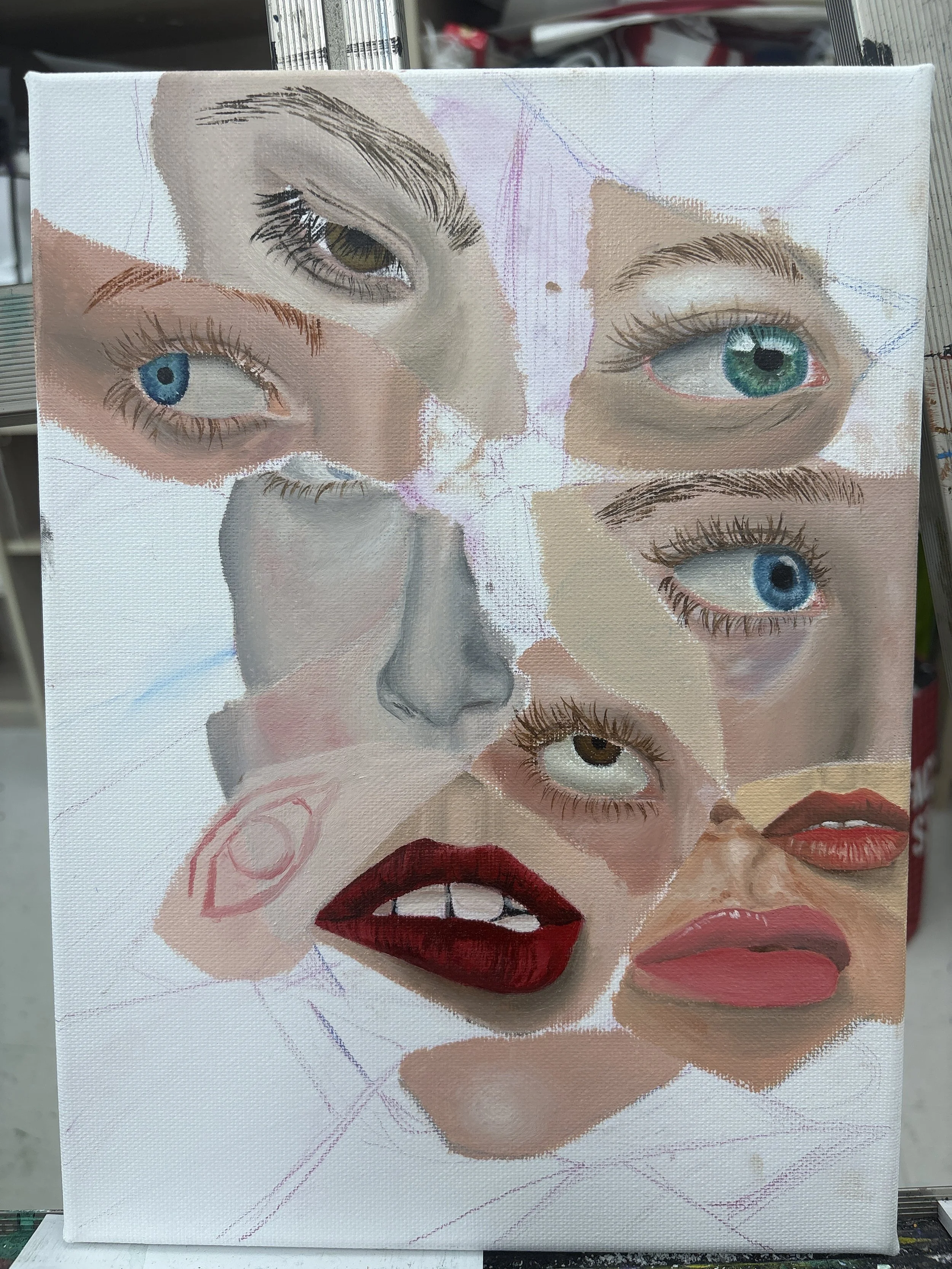
Public gaze| 2024| Oil Paint on Canvas| 16 × 22 in.
Beauty has no single permanent definition. Different cultures, trends, communities, and individuals value different features, meaning that the standards people attempt to satisfy can contradict one another. I separate different eyes, lips, skin tones, and facial characteristics across broken mirror fragments instead of allowing them to form one complete face. The mirror, normally used to examine a single reflection, becomes filled with competing possibilities of what someone is “supposed” to look like. I wanted to convey the impossibility of reaching universal perfection when the definition of perfection constantly changes depending on who is looking.
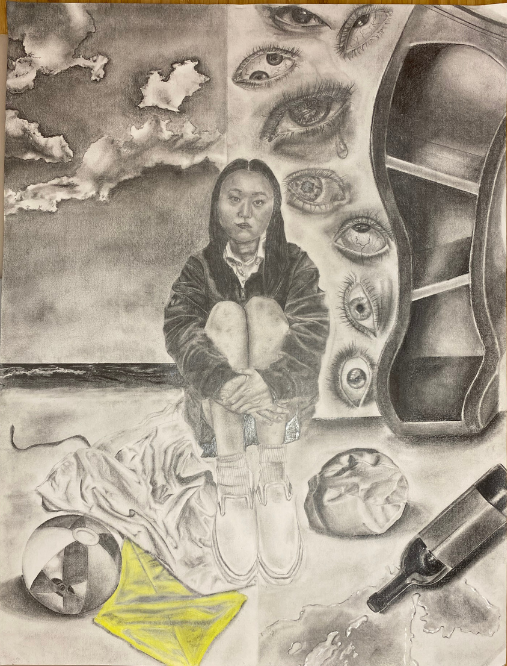
Pressure | 2024| Graphite on Paper | 18 × 24 in.
External judgment can eventually become internalized until the feeling of being observed remains even when nobody is physically present. I place myself alone in a personal environment, yet repeated eyes surround the figure from every direction. Their presence transforms a private space into one that feels exposed. Clothing, a mirror, and other personal belongings connect that imagined observation to ordinary decisions about appearance and presentation. I wanted to convey the point at which the question changes from “How do I want to look?” to “How will other people see me?” The eyes therefore represent not actual observers, but the internalized awareness of other people’s possible judgment.
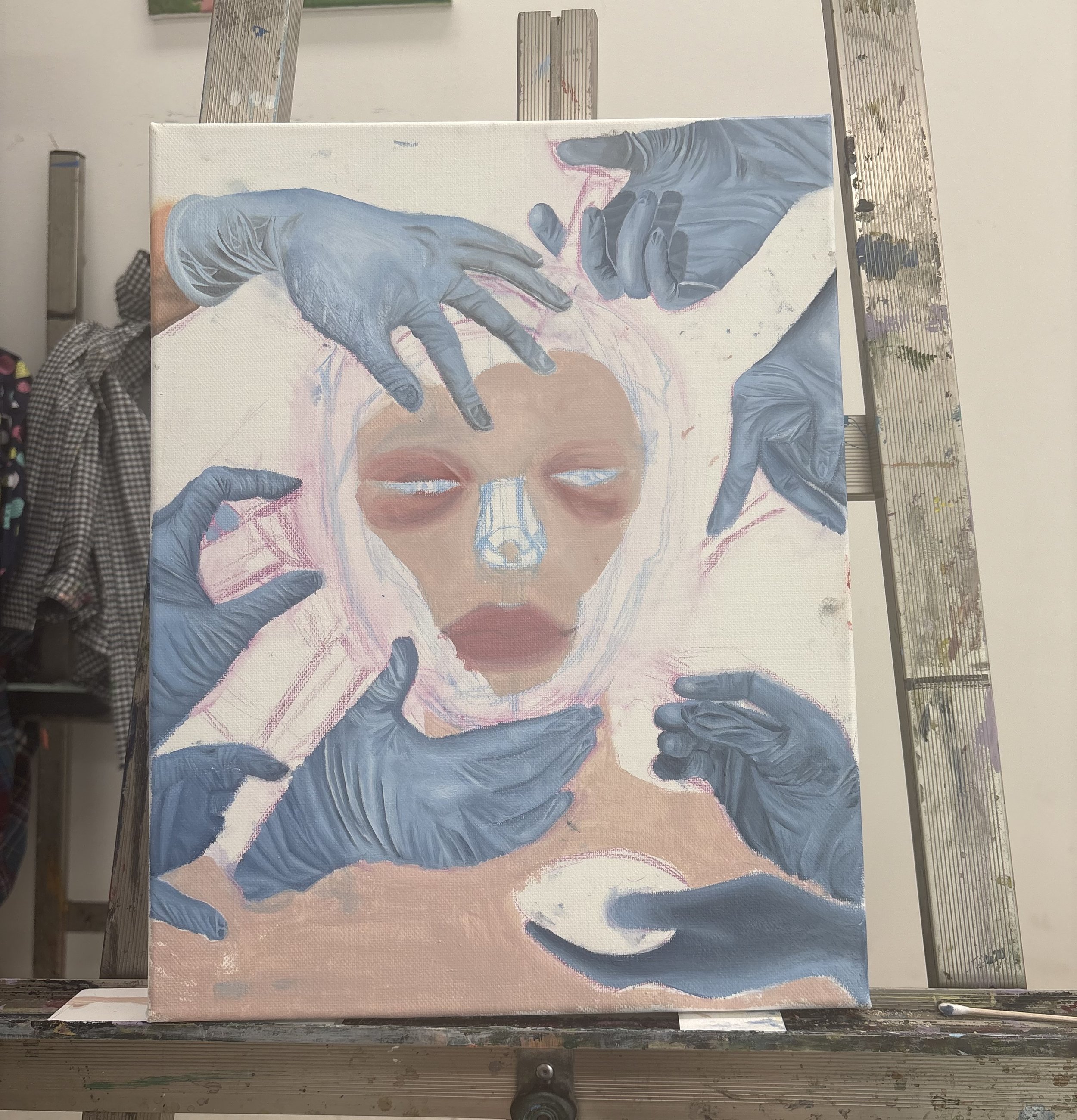
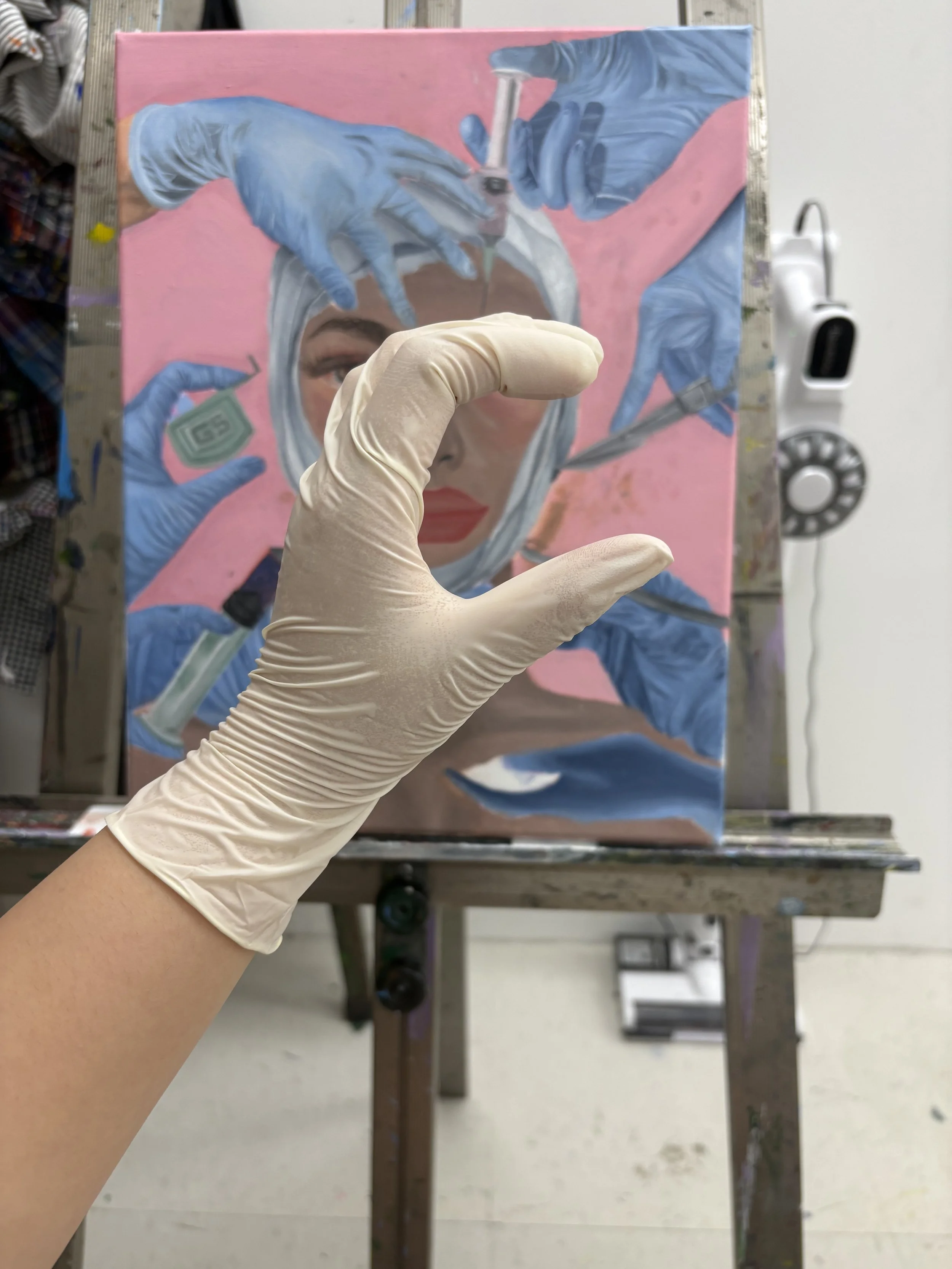
Cosmetic procedures and beauty treatments have become increasingly normalized, making physical alteration feel more routine and socially acceptable. Procedures that were once considered extreme are now often presented through social media, advertising, and beauty culture as ordinary forms of maintenance or self-improvement. I wanted to focus on how repeated exposure can make people less sensitive to the seriousness of constantly changing the body.

The woman’s expression is intentionally emotionless, and her blank eyes suggest numbness rather than fear or excitement. While gloved hands surround her with syringes, measuring tools, and treatment equipment, she remains completely still, as if the process has become so familiar that she no longer reacts to it. I wanted this lack of emotion to convey how easily people can become desensitized to cosmetic alteration when it is treated as normal and expected. The crowded hands also suggest that there is always another feature that can be examined, treated, or improved, creating a cycle in which changing one part of the appearance can lead to dissatisfaction with another.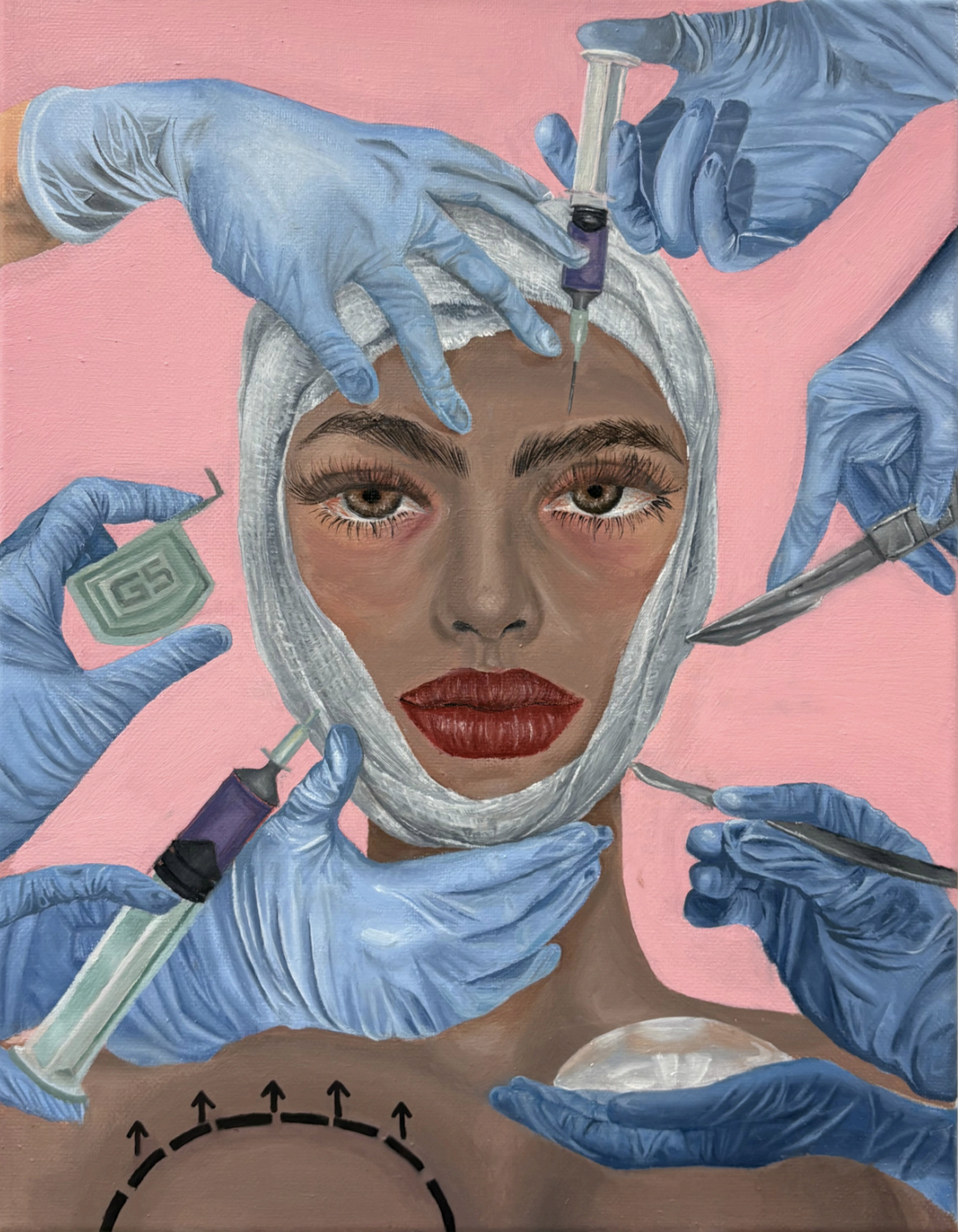
Artifact | 2026 | Oil Paint on Canvas | 18 × 24 in.
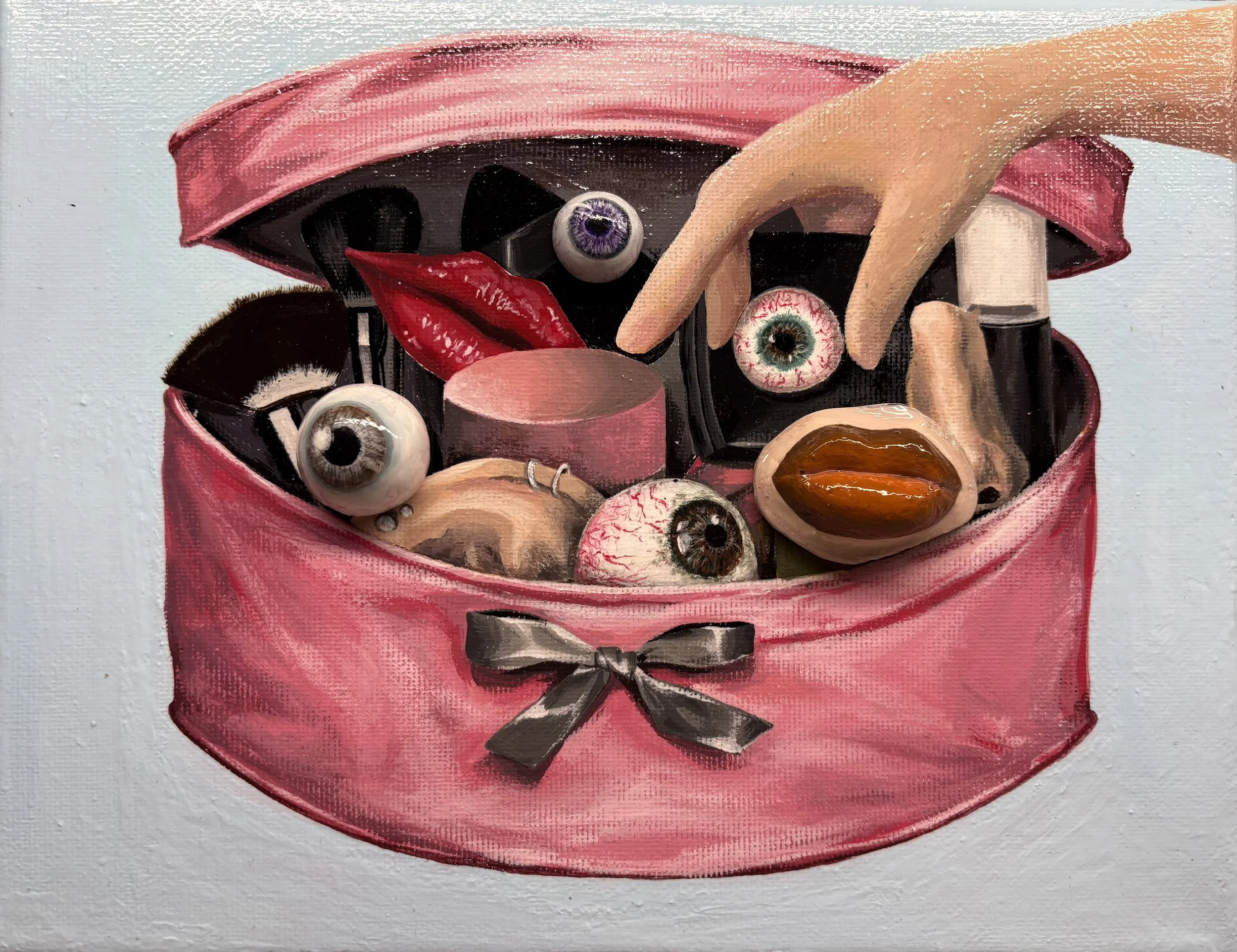
Components | 2025 | Acrylic and Clay on Canvas | 14 × 18 in.
Contemporary beauty culture increasingly presents appearance as customizable. Features can be enhanced, altered, selected, or replaced, creating the impression that the face itself can be assembled according to preference. I place detached eyes and lips beside familiar cosmetics inside a pink beauty case, deliberately making human features resemble products available for selection. The feminine colors and recognizable makeup initially make the image playful and attractive, while the detached facial features gradually make that familiarity unsettling. I wanted to convey how insecurity can become commercialized when dissatisfaction creates a market in which another purchase or modification is continuously offered as a way to construct a more desirable self.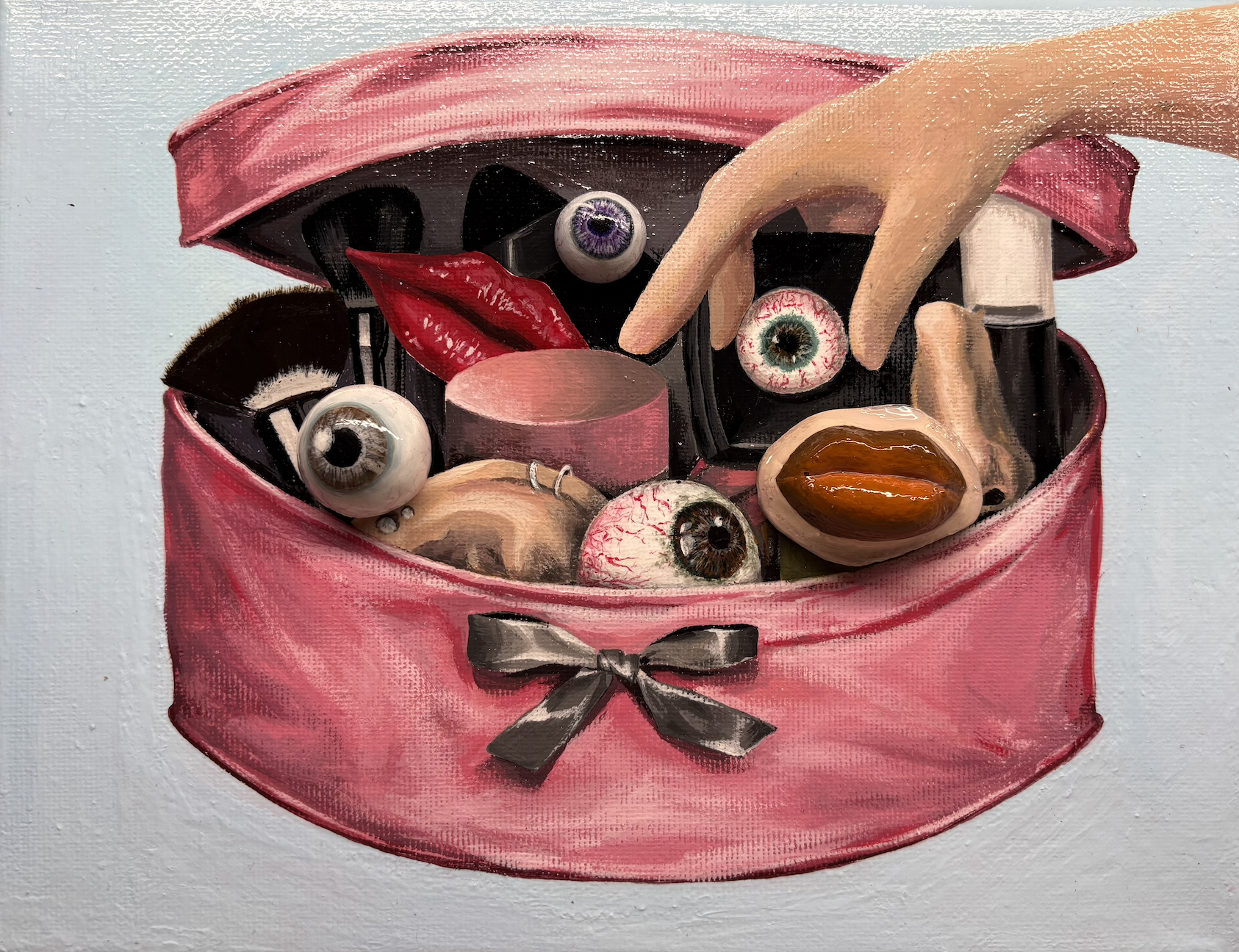
Process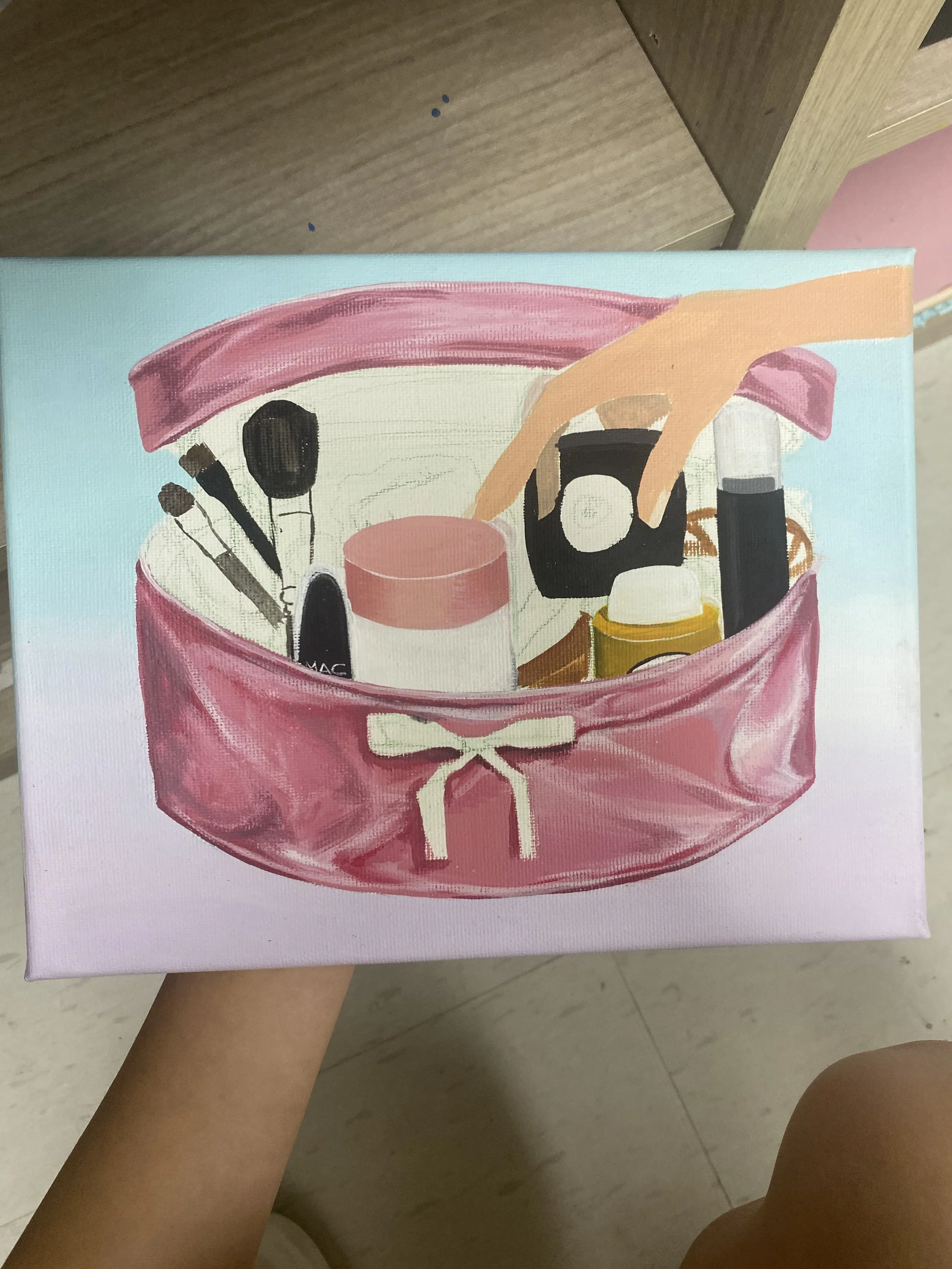
1. Initial Painting
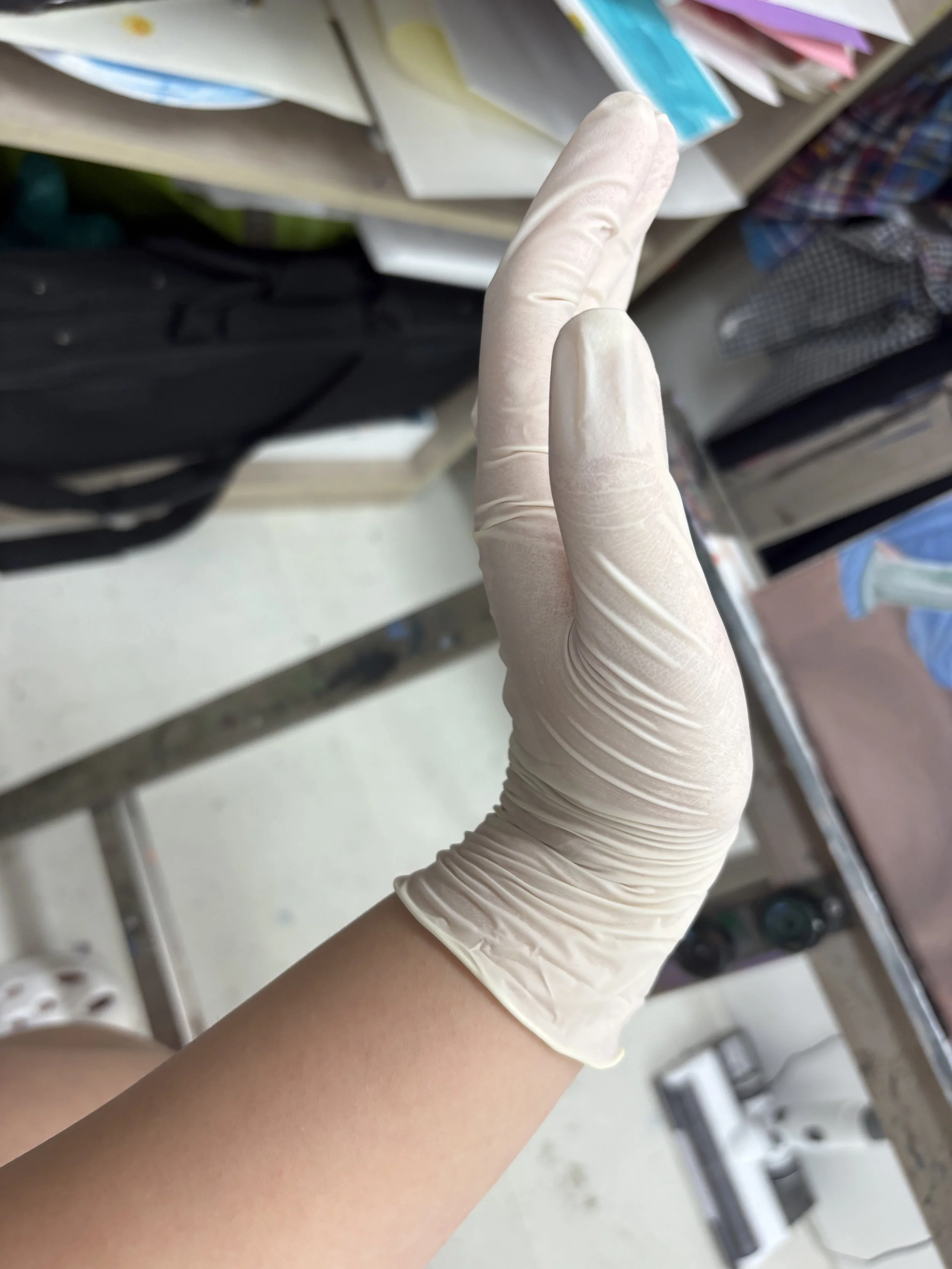
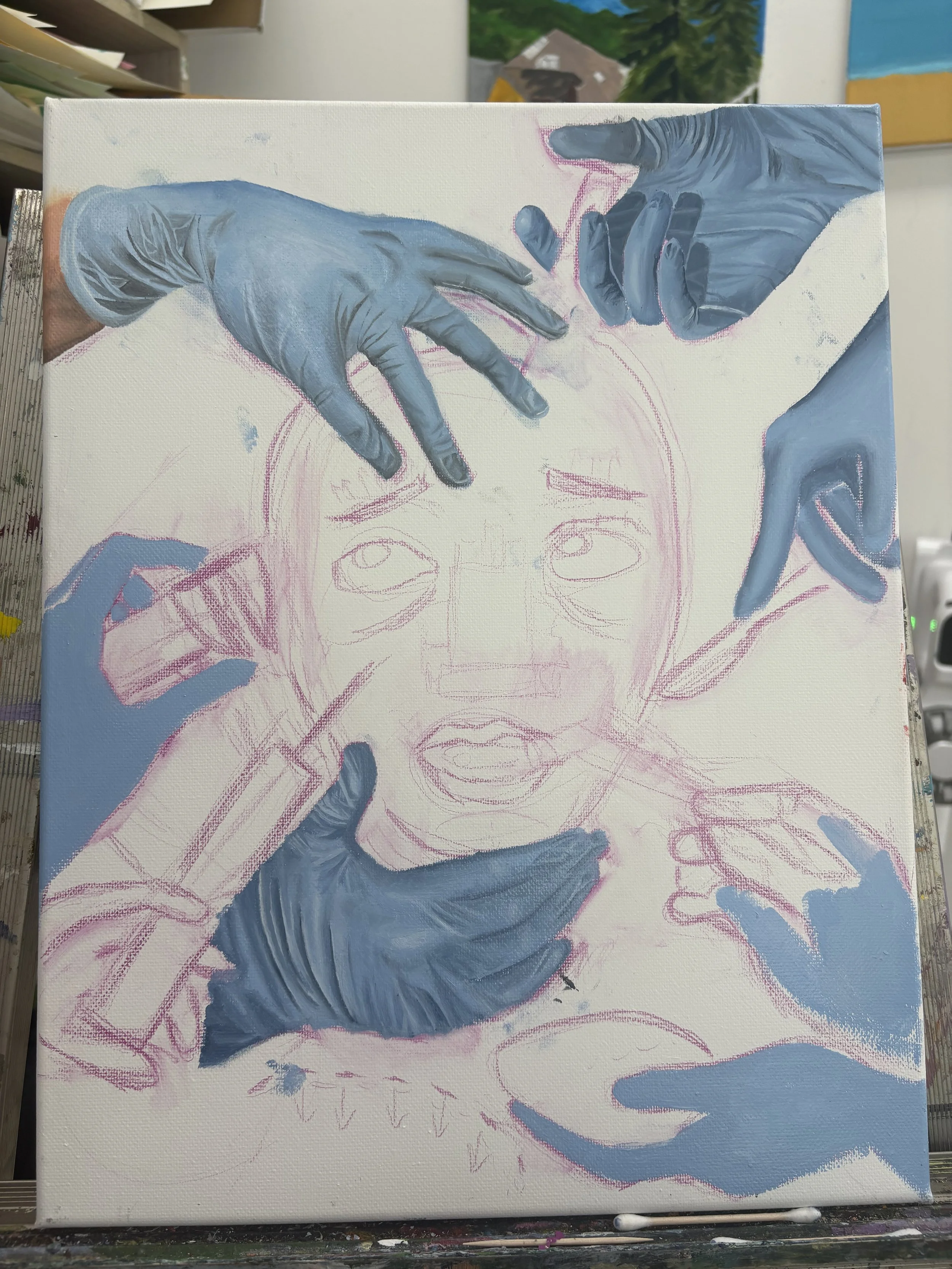
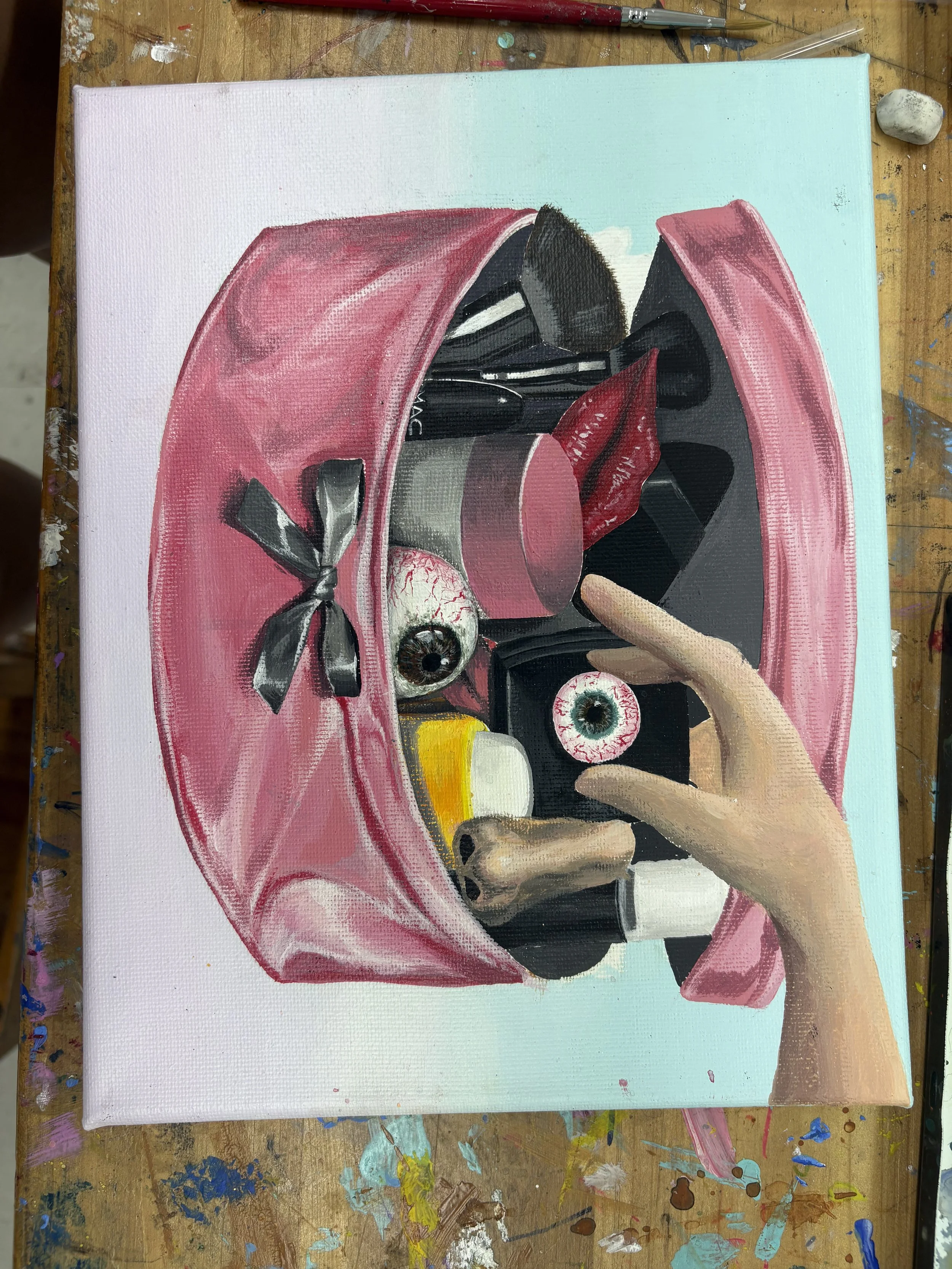
I prepared the canvas with gesso and began the first layer of acrylic paint. At this stage, I focused on establishing the overall composition and creating a clear contrast between light and dark areas. As I developed the first layer, the direction of the work became clearer and inspired me to push the idea beyond a traditional painted surface.
2. Developing the Painting
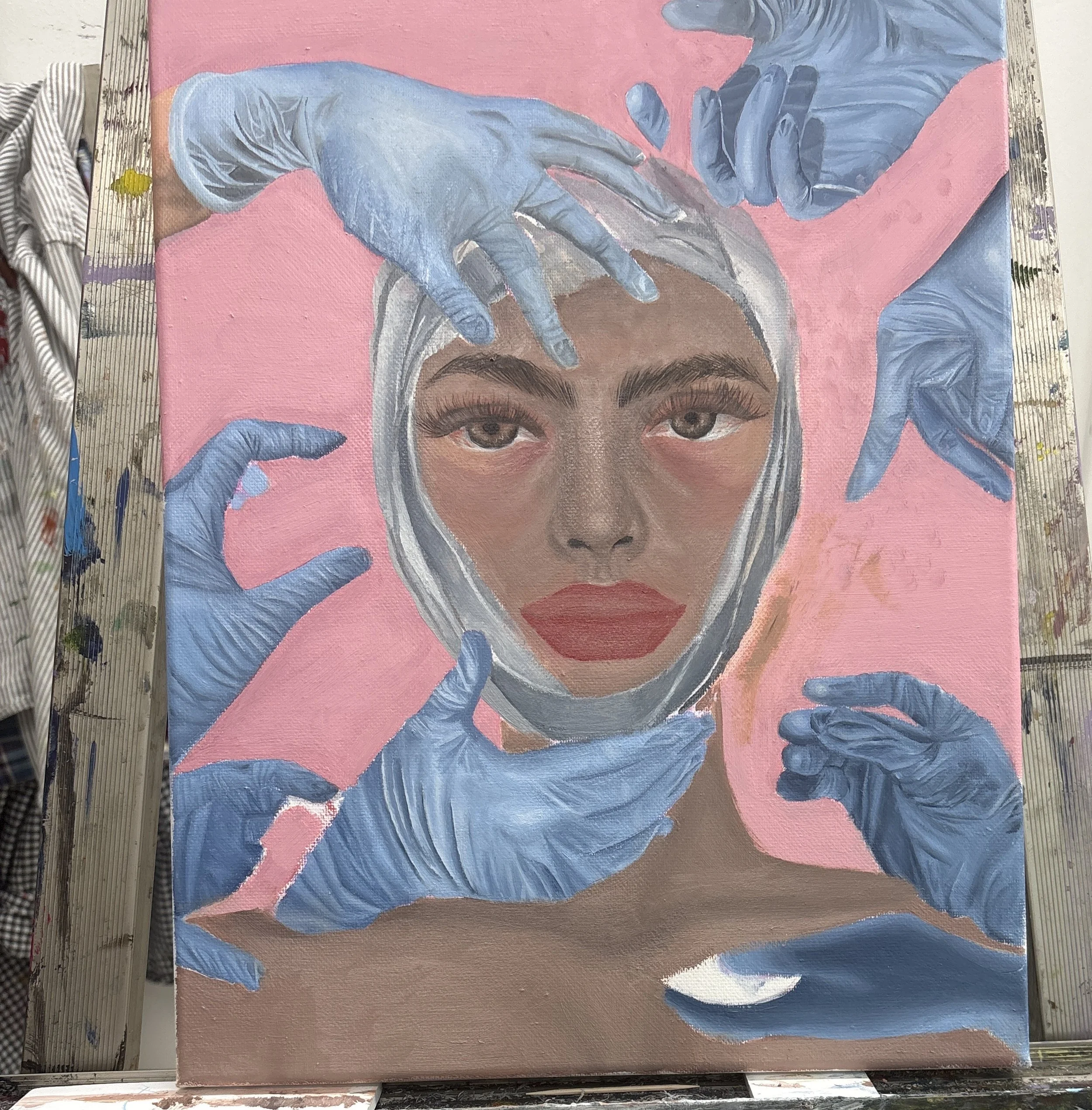
I continued building the acrylic layers, refining the forms, colors, shadows, and details of the cosmetic bag and its contents. I strengthened the contrast and added more realistic textures so the familiar beauty products would initially appear attractive and recognizable. At this stage, I also began thinking about how introducing unexpected human features could change the meaning of the ordinary cosmetic bag.
3. Adding Three-Dimensional Elements
To extend the painting beyond a flat surface, I sculpted three-dimensional eyes and lips from clay and attached them directly to the work. Turning facial features into physical objects makes them appear interchangeable with the cosmetics surrounding them. I wanted this final addition to make the familiar beauty bag feel increasingly unsettling and reinforce the idea of physical features being treated as objects that can be selected, customized, and replaced.
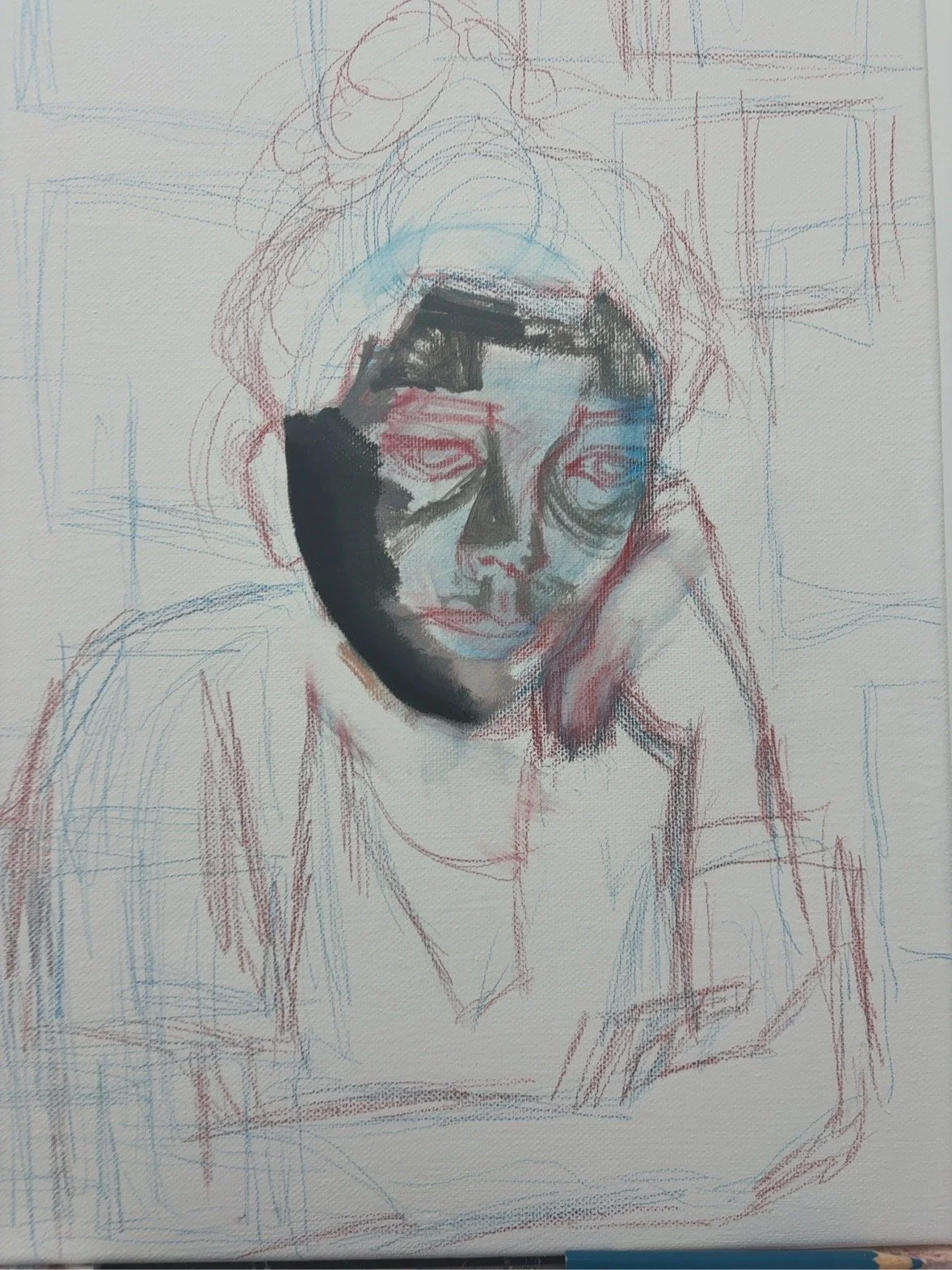
Makeup can do more than modify physical appearance; it can influence the identity a person chooses to present to the outside world. By dividing the portrait into two contrasting halves, I wanted to visualize a divided identity between the unaltered self and a constructed persona created through makeup. The separation down the center emphasizes that both identities belong to the same individual, yet they communicate differently to the viewer. Makeup becomes almost like a mask—not necessarily something false, but a tool capable of creating an alter ego that may appear more confident, dramatic, mature, or socially desirable. I wanted to explore how repeatedly transforming our outward appearance can also affect the way we understand and present ourselves. Rather than asking which half is the “real” person, the work questions whether identity can be divided so easily when both the natural self and the constructed persona are genuine parts of the same individual.
Jekyll & Hyde | 2025 | Graphite on Paper | 9 × 12in.
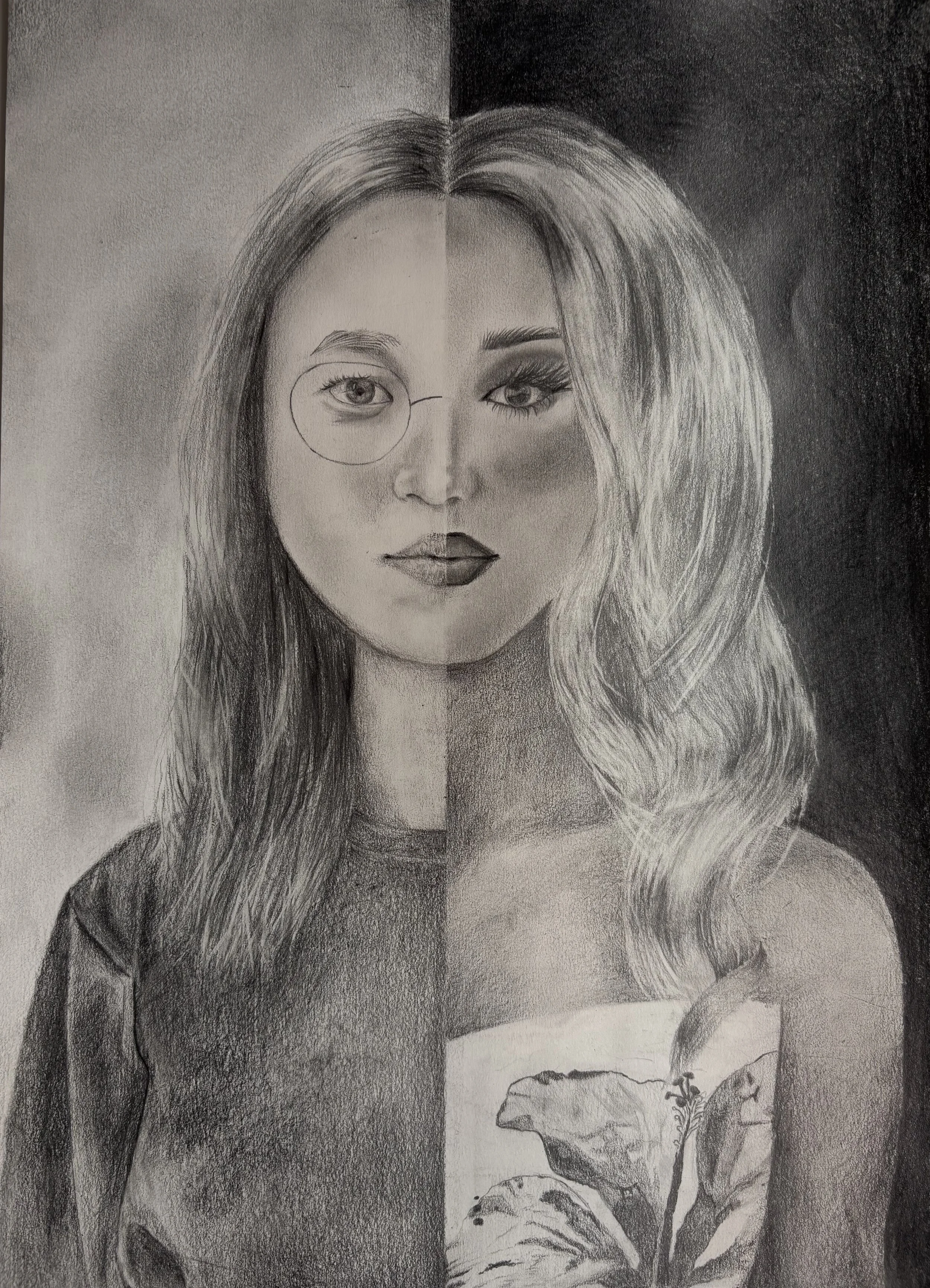
Me Myself and I | 2024 | Graphite on Paper | 11 × 13in.
Self-acceptance does not mean returning to childhood innocence or becoming completely indifferent to appearance. Once beauty standards, comparison, and judgment become visible, that awareness cannot simply be erased. Instead, acceptance can mean recognizing those influences without allowing them to determine an entire sense of self.
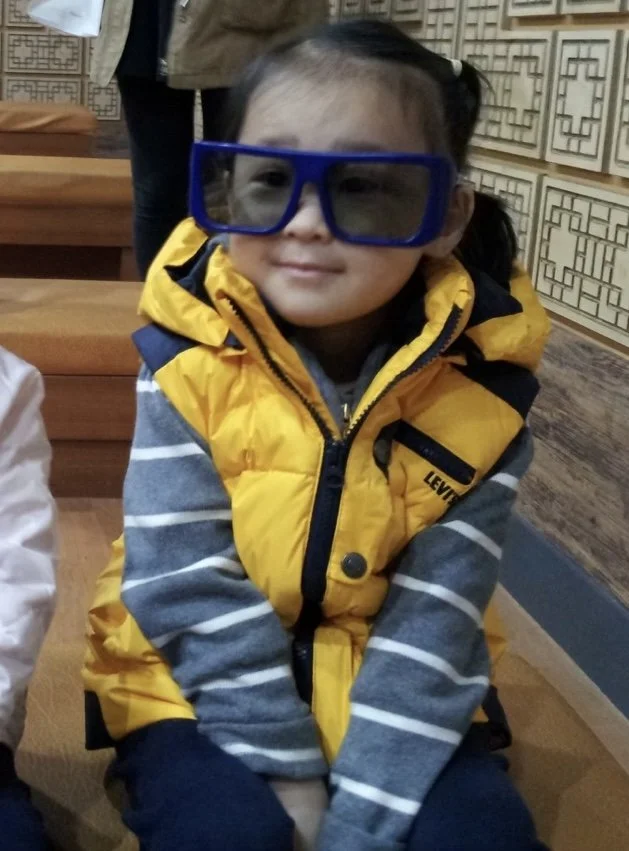
I return to the smiling portrait from the beginning of the portfolio to create a circular narrative, but the meaning of the smile has changed. The child smiles because she has not yet learned to judge herself through other people’s expectations. The final figure smiles despite knowing those expectations exist. I wanted the ending to convey a more conscious form of freedom: I can still enjoy beauty, fashion, and self-expression while understanding that appearance is only one part of my identity rather than the measure of my value.
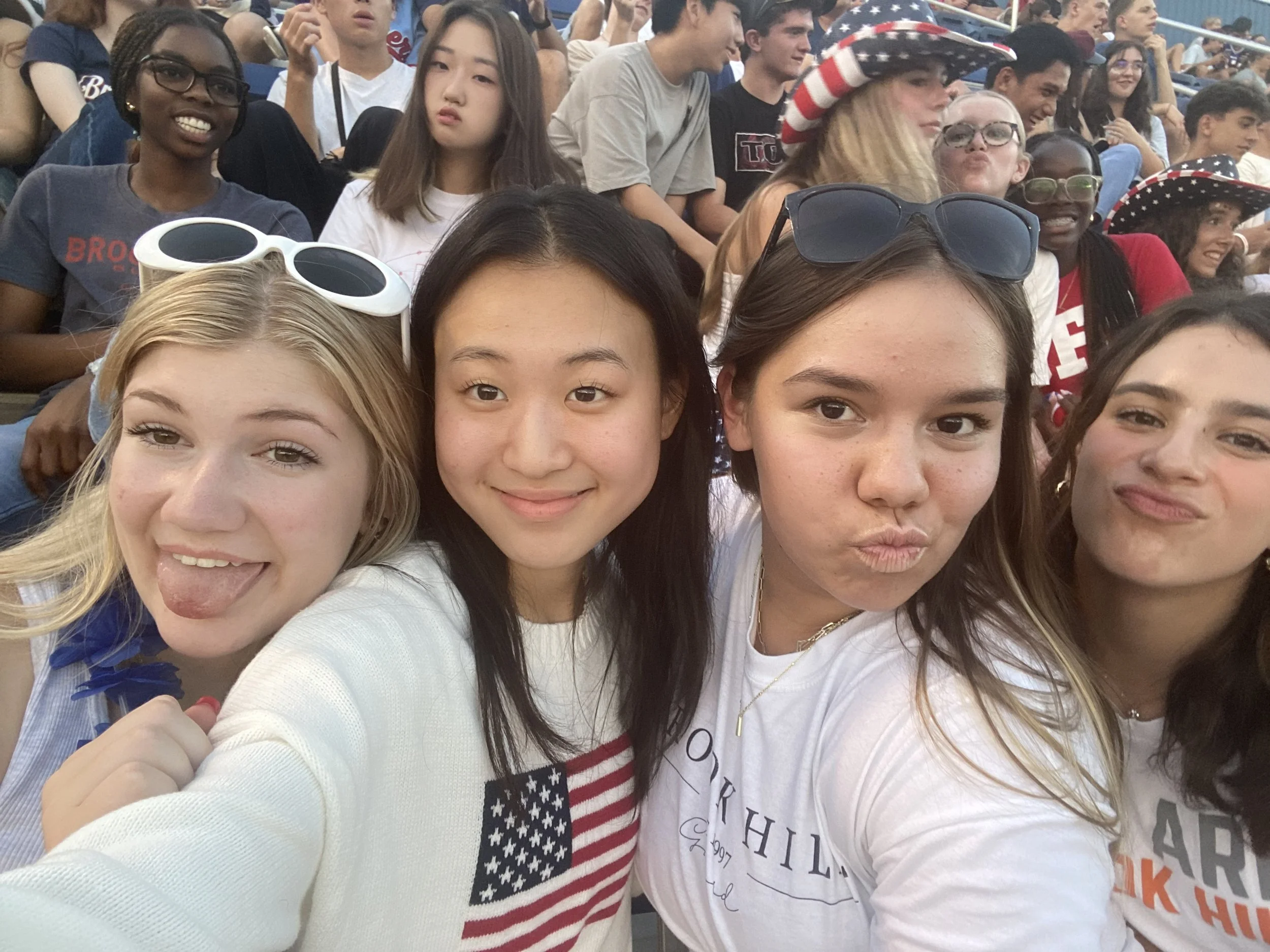
What I realized is that finding yourself does not mean becoming perfect or finally fitting every standard. It means learning what parts of you are truly yours and what parts were shaped by comparison, expectations, and the need to be accepted. I am still learning, but I feel like I have found more of myself beyond appearance. If you are going through the same struggle, I hope you find yourself too—not the version of you that everyone else expects, but the version that feels genuinely yours.